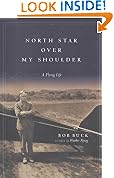
by Bob Buck
 (30)
(30)53 used & new from $0.01
(Visit the Best Sellers in Travel list for authoritative information on this product's current rank.)
Review & Description
It is rare to find one person whose life embodies the history of an industry the way Bob Buck's life encompasses the history of commercial aviation in America. Buck first flew in the 1920s, inspired by the exploits of Charles Lindbergh. In 1930, at age sixteen, he flew solo from coast to coast, breaking the junior transcontinental speed record. In 1936 he flew nonstop from Burbank, California, to Columbus, Ohio, in a 90-horsepower Monocoupe to establish a world distance record for light airplanes. He joined Transcontinental and Western Air (T&WA) as a copilot in 1937; when he retired thirty-seven years later, he had made more than 2,000 Atlantic crossings -- and his role had progressed from such tasks as retracting a DC-2's landing gear with a cockpit-based hand pump to command of a wide-body 747.
Buck's experiences go back to a time when flying was something glamorous. He flew with and learned from some true pioneers of aviation -- the courageous pilots who created the airmail service during flying's infancy. At the behest of his employer Howard Hughes, Buck spent three months flying with Tyrone Power on a trip to South America, Africa, and Europe. He flew the New York-Paris-Cairo route in the days when flight plans called for lengthy stopovers, and enjoyed all that those romantic places had to offer. He took part in a flight that circled the globe sideways (from pole to pole). He advised TWA's president on the shift to jet planes; a world expert on weather and flight, Buck used a B-17G to chase thunderstorms worldwide as part of a TWA-Air Force research project during World War II, for which he was awarded the Air Medal (as a civilian) by President Truman.
In North Star over My Shoulder, Bob Buck tells of a life spent up and over the clouds, and of the wonderful places and marvelous people who have been a part of that life. He captures the feel, taste, and smell of flying's greatest era -- how the people lived, what they did and felt, and what it was really like to be a part of the world as it grew smaller and smaller. He relates stories from his innumerable visits to Paris, the city he loves more than any other -- echoing Gertrude Stein's view that "America is my country, and Paris is my home town" -- and from his trips to the Middle East, including flights to Israel before and after it became a state. A terrific storyteller and a fascinating man, Bob Buck has turned his well-lived life into a delightful memoir for anyone who remembers when there really was something special in the air.Bob Buck may not be as famous as Charles Lindbergh, but he's well known among aviators for setting flight-distance records in the 1930s, flying a B-17 in the Second World War, and finally, becoming a commercial airline pilot who logged more than 2,000 trips across the Atlantic Ocean. North Star over My Shoulder is Buck's memoir of a life spent in the skies. He shares plenty of cockpit wisdom: "A copilot can make a trip or ruin it; get someone who talks too much, gripes about the company, tries to impress you, tells long and boring anecdotes, or is overly aggressive in suggesting ways to run the flight, and the taste is unpleasant." He also answers the question he says nonpilots are most likely to ask him: How do you overcome jet lag? "You don't," he says. Buck addresses offbeat subjects, too, such as what an airline pilot does when one of his first-class passengers is irate about the lack of caviar on a long trip. Readers fascinated by flight will enjoy this book, both for its historical perspective on advances in aviation ("a time no one will ever experience again") and the good advice that springs from almost every page ("sitting low tends to make you level off a little too high, while sitting up high tends to make you fly into the ground and not level off enough"). Pilots will appreciate this book, as will anybody who has ever wondered what it's like to fly a plane. --John Miller Read more



 (4)
(4)

 (16)
(16)

 (126)
(126)